A manor for Great Danes, in Senneville.
Fifteen years, three coats, and one rule that has never changed: never more litters than we can personally oversee, from the first day to the last.
Our first Great Dane taught us the hardest lesson.
Sultan, our very first Great Dane, grew too fast. Fed "to speed up his growth" — advice we deeply regret following — he developed hip dysplasia diagnosed at barely ten months old. That lesson, paid for by him, changed the way we breed for good.
Today, every litter grows on a nutrition plan calculated to the gram. Zeus, our stud, and our dams live with us at the manor, and we know every puppy well enough to know, by week six, which family they belong with.
Fifteen years later, Sultan remains the reason we refuse to rush anything — a litter, a growth curve, a sale.
Three coats, and nothing else.
We don't diversify. Mastering three lines well beats skimming eight.
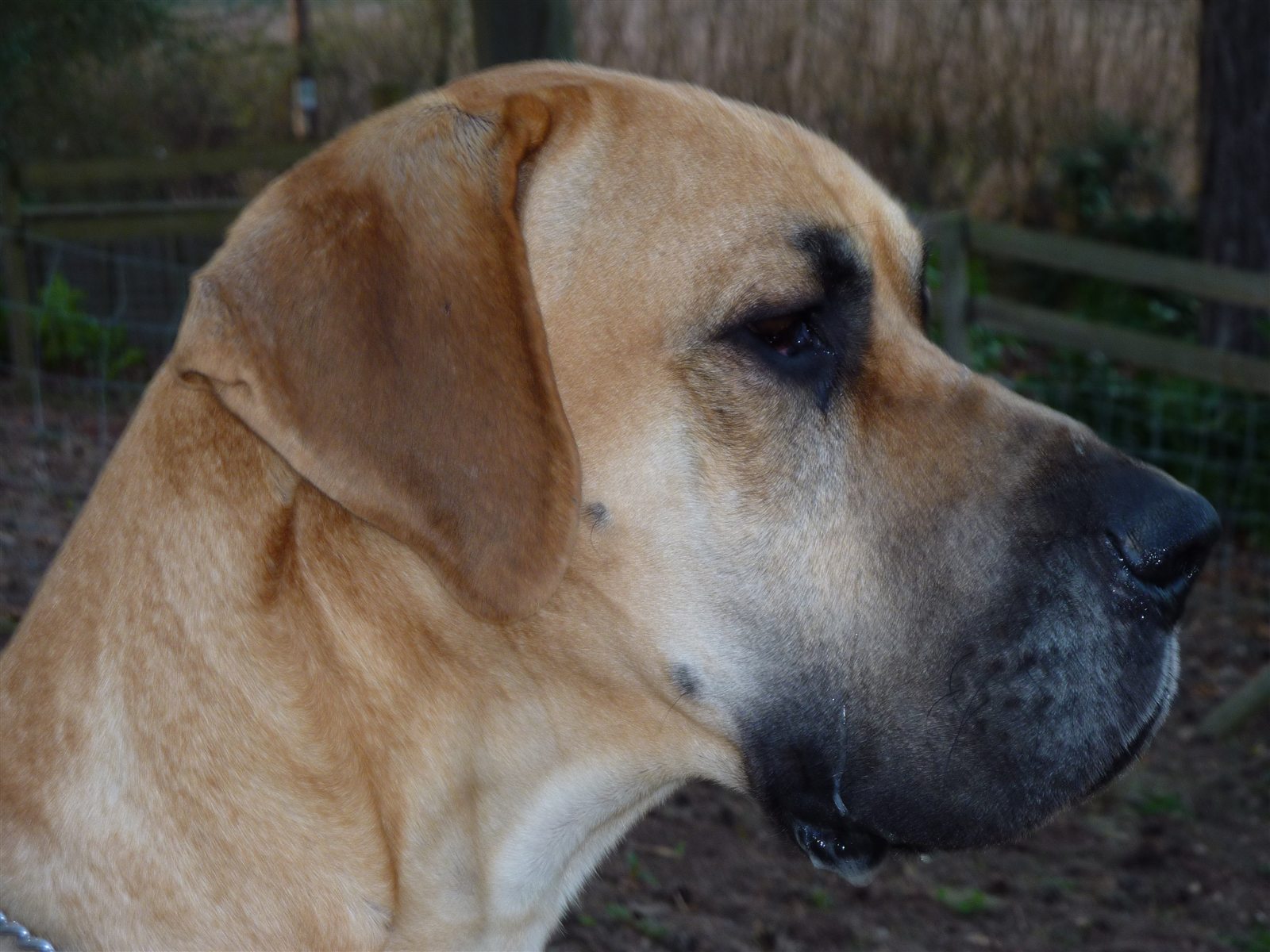
Fawn
The breed's historic coat, from pale gold to deep mahogany, always with a crisp black mask. It's Zeus's coat, our stud, and the one that founded our line.
Worth knowing: the mask must be clean and well defined — a standard we hold to litter after litter.
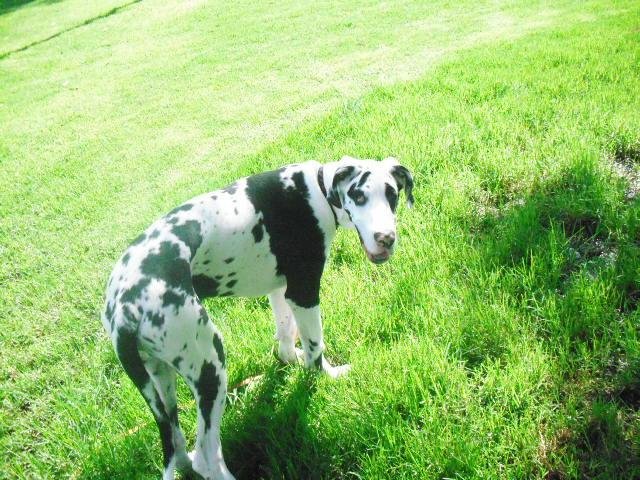
Harlequin
The most striking coat: pure white base, irregular black patches, no two dogs ever alike. It's also the most demanding to produce correctly.
Worth knowing: the harlequin gene is linked to the merle gene — a poorly managed pairing can produce puppies with too much white, often deaf or blind. We never take that risk.
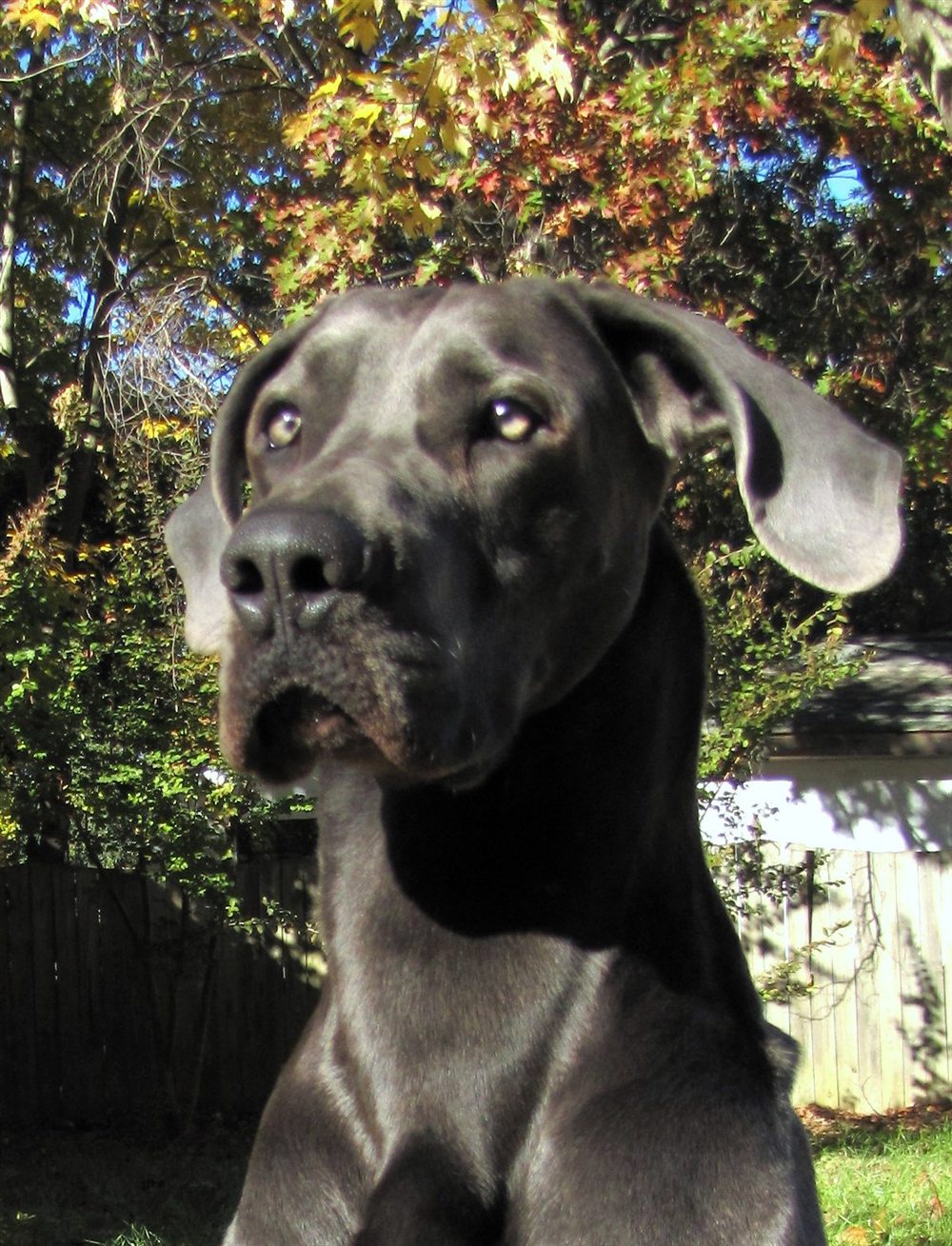
Blue
A uniform slate grey, almost blue under the light — the result of a dilution of black. Rare and highly sought after, but never chased at the expense of health.
Worth knowing: we refuse any repeated blue × blue pairing that would further narrow an already limited gene pool.
We never chase a coat at the expense of health. Some kennels pursue white or merle purely for commercial rarity — a gamble that multiplies the risk of deafness and blindness. That is not our practice, and never will be.
What we screen for, and what we guarantee.
No mating happens until both parents have completed the screenings recommended for the breed. Certificates are handed to you in person — not summarized, not "available on request".
Hips and elbows
X-rays evaluated by a recognized body, on both parents, before mating — vital in a giant breed.
Heart
Doppler echocardiogram to screen for dilated cardiomyopathy, a condition of particular concern in Great Danes.
Genetic panel
DNA testing for the breed's known hereditary conditions, so two carriers are never paired.
A two-year guarantee against serious hereditary conditions, provided in writing. Replacement or refund, your choice.
Gastric dilatation-volvulus (bloat). This is the number-one emergency in deep-chested giant breeds like the Great Dane. Every adopting family is trained, before the puppy leaves, to recognize the signs — a swollen abdomen, unproductive retching, sudden restlessness — and in prevention: several small meals rather than one, no vigorous exercise before or after eating.
You leave with the contact information for a 24-hour emergency veterinary clinic from day one.
Come and see before you decide.
We welcome families by appointment, even without a firm plan. You'll see where the puppies are born, meet Zeus and our dams, and get to ask the hard questions.
One piece of advice, even if you don't adopt from us: be wary of a breeder who offers to meet you in a parking lot or won't show you the mother. It's the most reliable signal there is.